The Science Behind the Method
Technology
Cube Caving™ is a patented underground block cave mining methodology built on a single geometric insight — the 90° square grid. Every element of the system flows from this principle.
PRINCIPLE 01
Geometric Principles
The 90° Square Grid
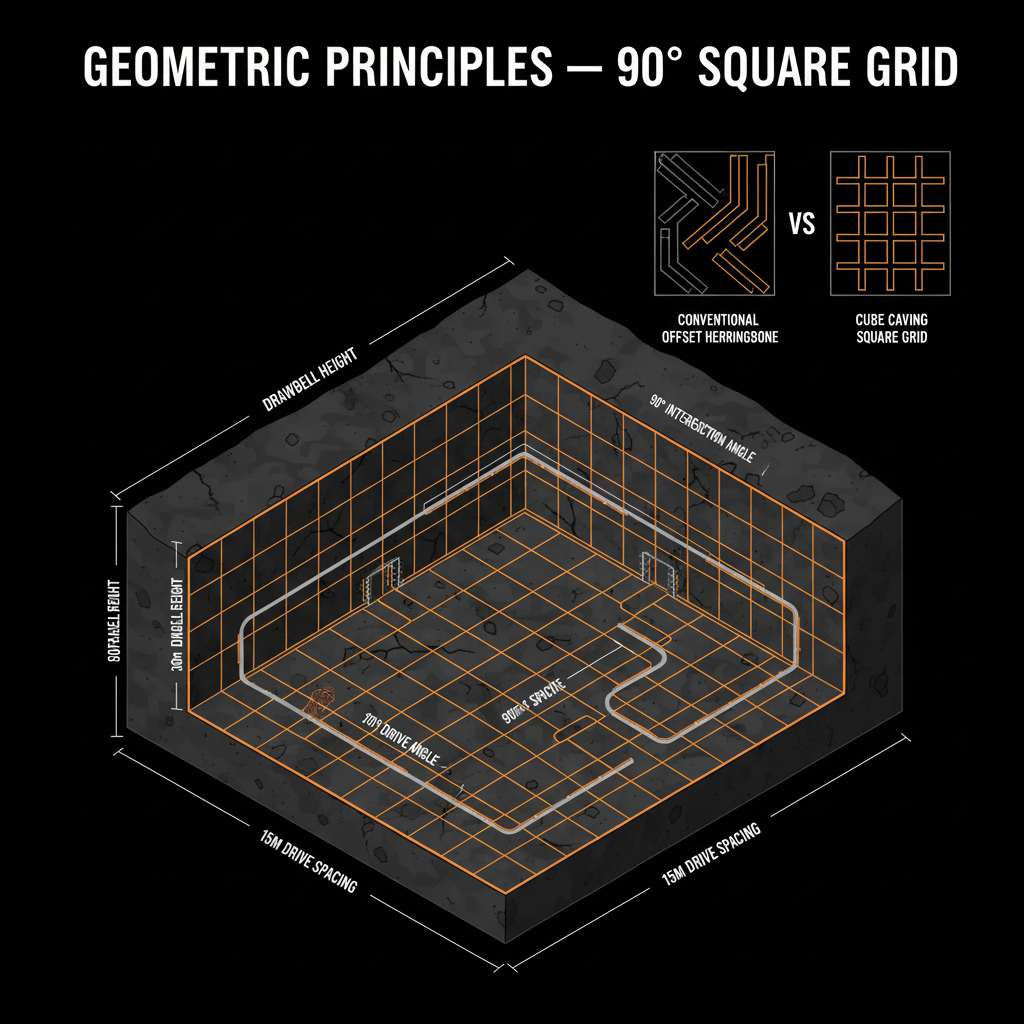
Conventional block cave mining uses an offset herringbone drawpoint layout inherited from El Teniente mine in Chile. This geometry creates unequal pillar shapes and stress concentrations at intersections — the root cause of drawpoint failures worldwide. Cube Caving™ replaces this with a perfect 90° square grid. Every pillar is identical. Every intersection carries equal load. The result is a structurally stable extraction level that eliminates the failure mode entirely.
PRINCIPLE 02
Drawbell Mechanics
30m Height — Gravity-Driven Ore Flow
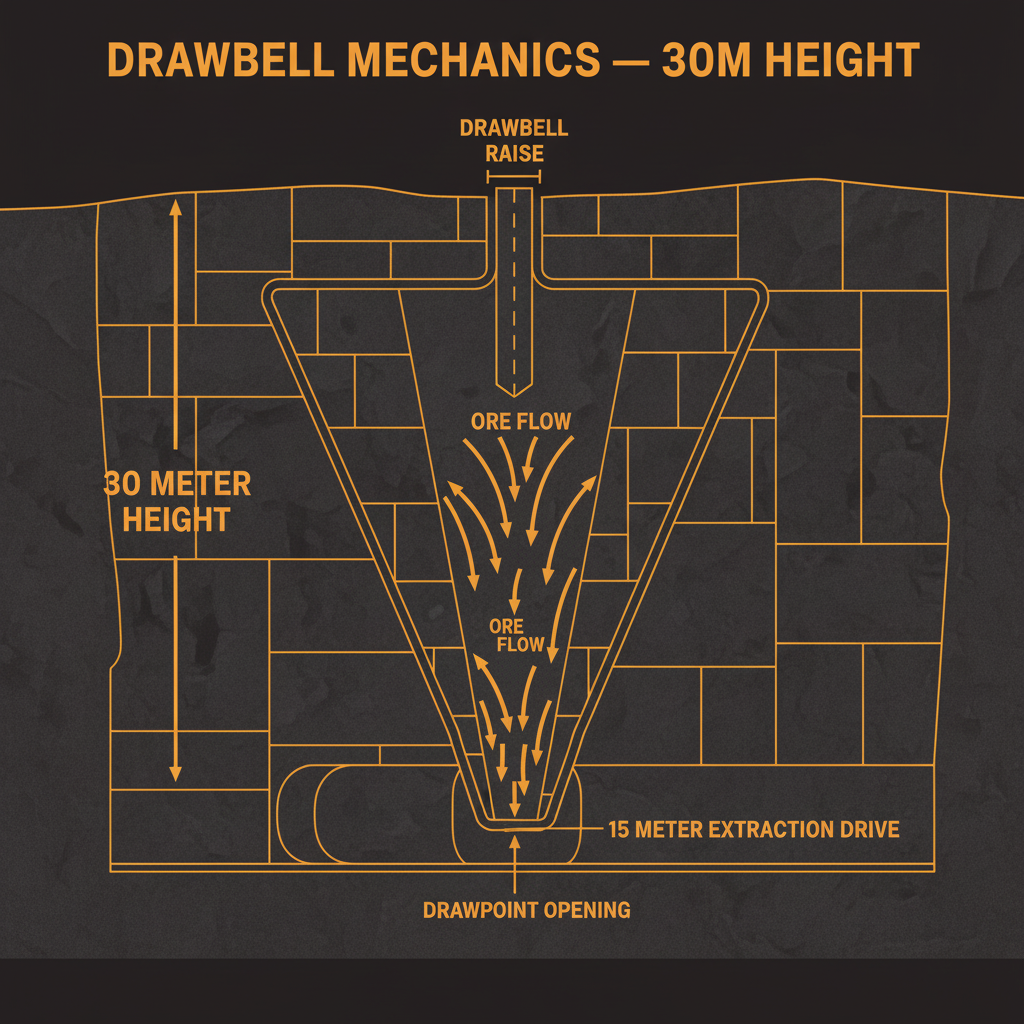
The Cube Caving™ drawbell is a four-sided funnel excavation 30 metres tall — significantly larger than conventional designs. This height is not arbitrary. It is the minimum required to achieve reliable gravity-driven ore flow without hang-ups across the full range of hard rock ore body types. The drawbell raise is drilled and blasted from the extraction drive upward, establishing the funnel geometry before the undercut is fired. This sequence — drawbell first, undercut second — is a critical departure from conventional practice and the key to achieving zero drawpoint losses.
PRINCIPLE 03
Extraction Methodology
Full-Column Ore Recovery at Depth
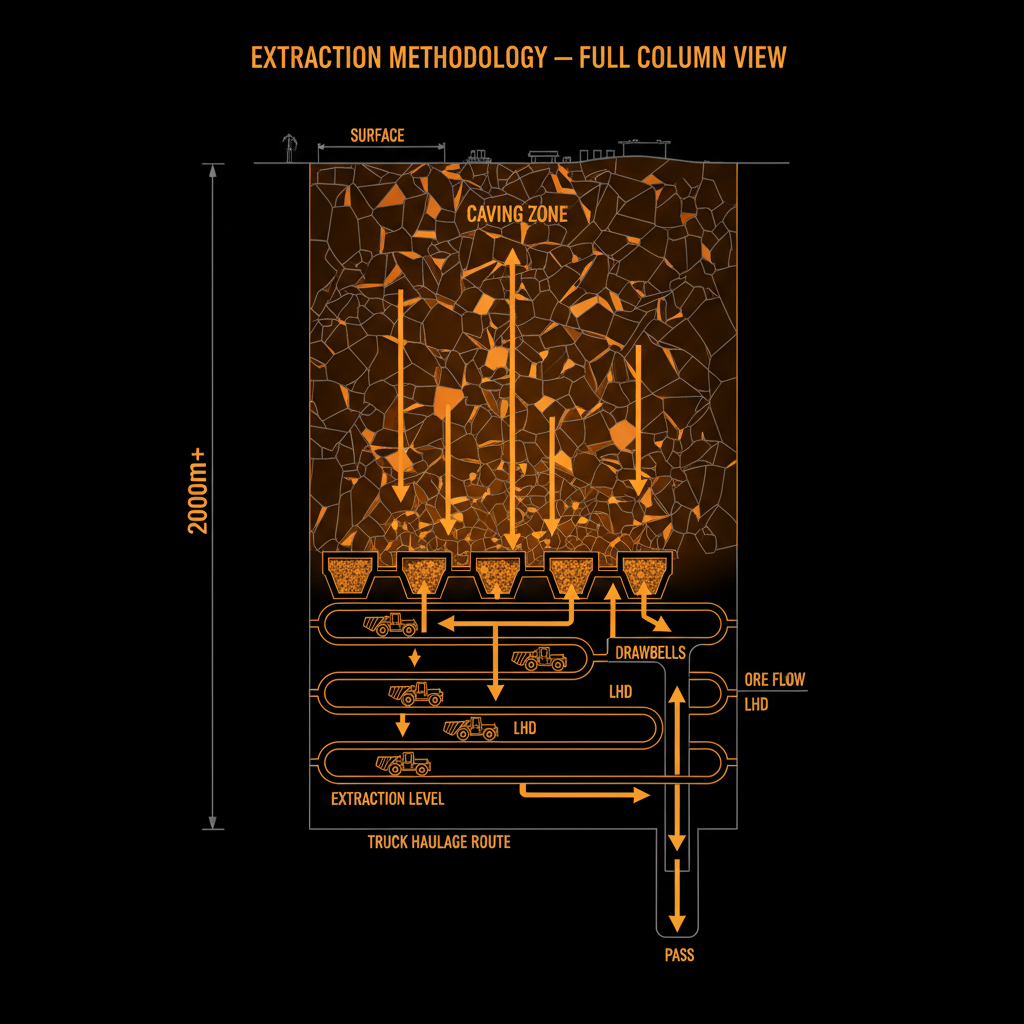
Cube Caving™ is designed for deep, high-value ore bodies — validated to 2,000 metres and beyond. The extraction methodology integrates the square grid geometry with a truck-based haulage system on the extraction level, eliminating the need for ore passes and crushers at depth. LHD loaders tram ore from drawpoints to truck loading points within the 15-metre drive spacing. Trucks haul directly to the shaft or decline. This integrated approach reduces capital cost by 30% and operating cost by 40% compared to conventional block cave infrastructure.
PRINCIPLE 04
Stress Distribution
Pillar Stability Analysis
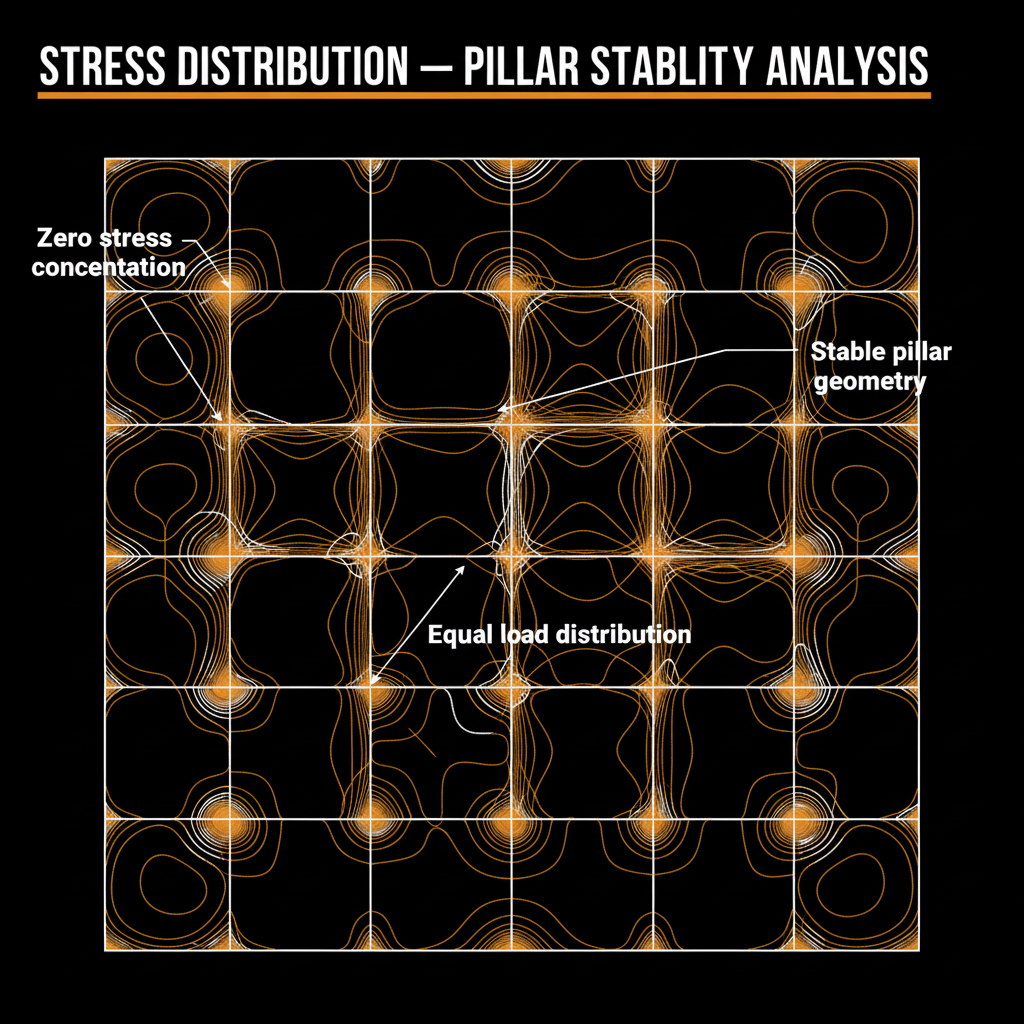
Numerical modelling and physical simulation studies confirm that the 90° square grid produces a fundamentally different stress distribution to conventional layouts. In the El Teniente herringbone pattern, stress concentrates at the acute-angle pillar corners — the failure initiation points. In the Cube Caving™ square grid, load distributes equally across all four faces of every pillar. Finite element modelling across 200+ simulation cases showed a consistent 50% reduction in peak pillar stress. This is not a marginal improvement — it is a structural transformation of the extraction level.
PRINCIPLE 05
Technical Specifications
Proven Parameters
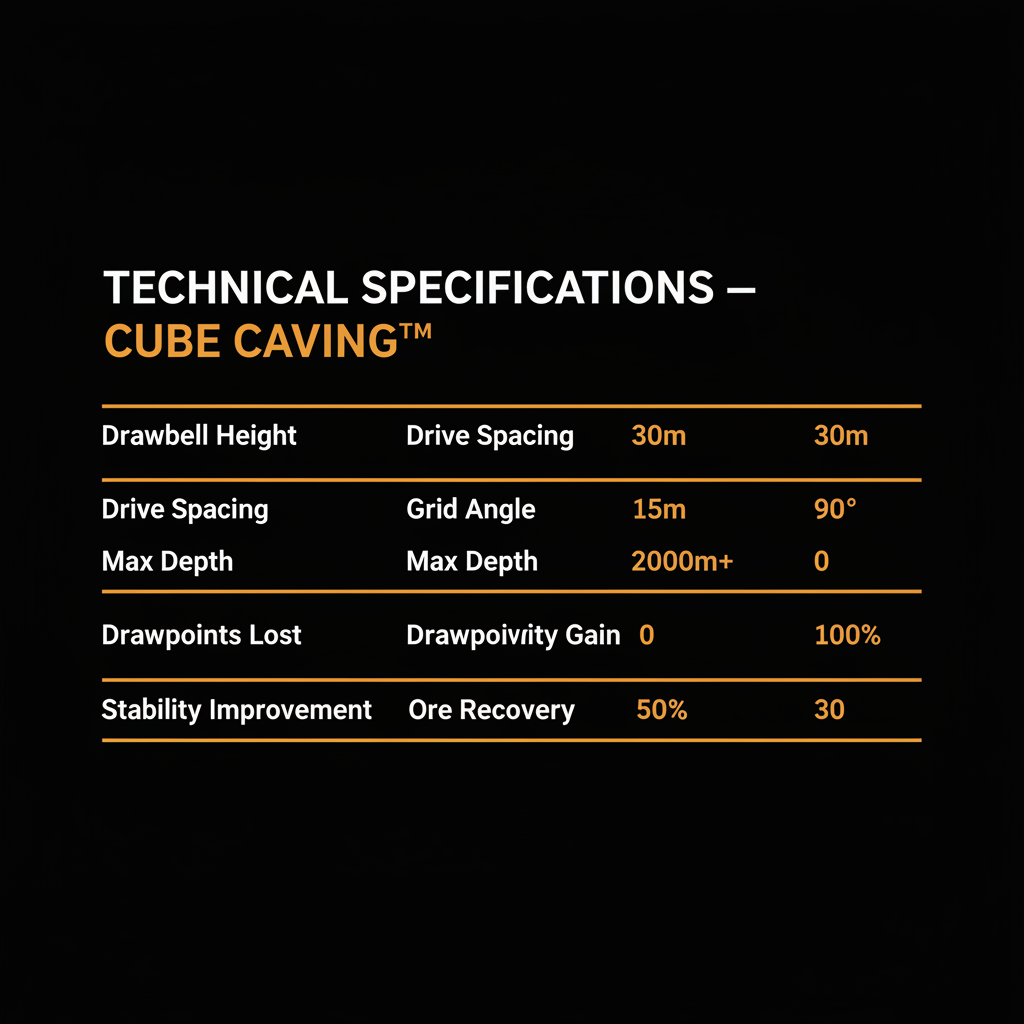
Every parameter in the Cube Caving™ system has been derived from first principles and validated through numerical modelling, physical simulation, and real-world application. The specifications below represent the design envelope within which the methodology delivers its full performance advantage. Projects outside these parameters require individual assessment by Dr Geoff Dunstan.
Intellectual Property
Globally Patented
The Cube Caving™ methodology is protected by granted patents in four jurisdictions — Canada, Scandinavia, South America, and Australia — with further applications pending. The patent portfolio covers the core geometric principles, the drawbell establishment sequence, and the integrated extraction methodology.
Apply This Technology
Discuss how Cube Caving™ can be engineered for your ore body.